

A tiny bottle can hold a surprisingly large story. One day you’re measuring milk for a newborn, another day you’re filling a water bottle before work, and suddenly a label says 1 liter while a recipe asks for fluid ounces.
It feels like the numbers are speaking two different languages, honestly. And when you’re celebrating something as tender as welcoming a baby girl,
even ordinary measurements can sneak into the picture formula, expressed milk, juice, water, cooking ingredients, or simply preparing a little family gathering where every cup somehow needs measuring twice.
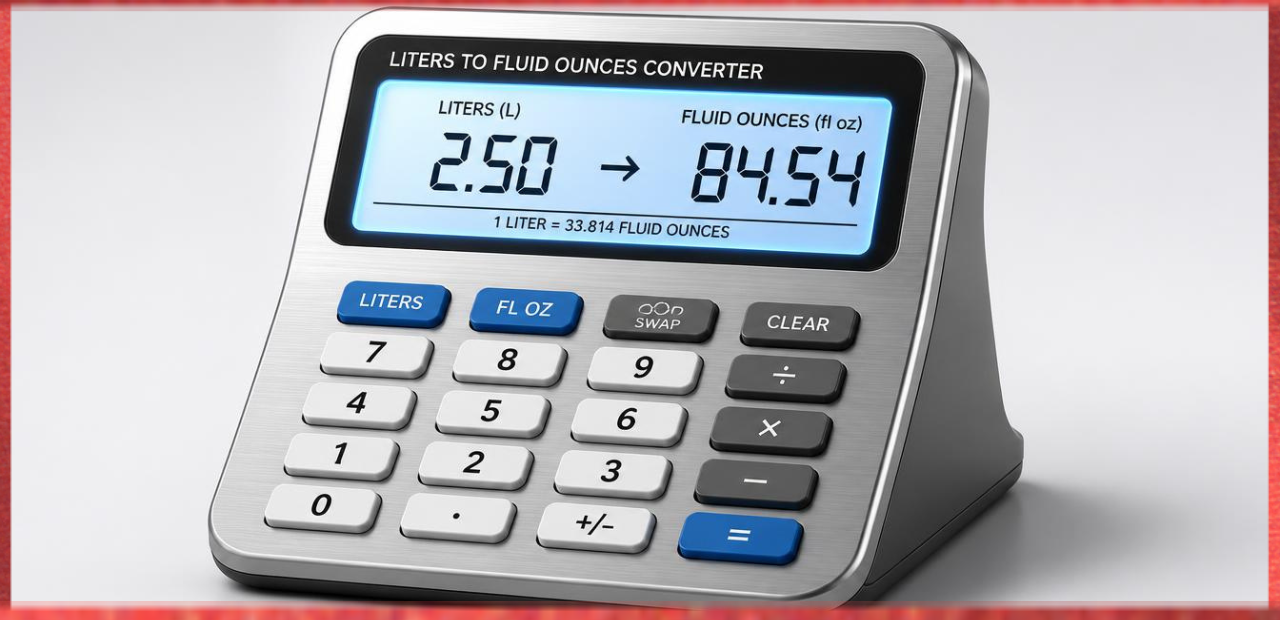
That is where a Liters to Fluid Ounces Converter becomes wonderfully practical. It turns a familiar metric volume into the US customary units that many American recipes, containers, and labels use.
The good news is that the actual conversion is not complicated at all. Once you know the conversion ratio, you can convert liters to fluid ounces almost as quickly as you can say, “the baby is finally asleep” which, as every tired parent knows, is a very precious unit of time too.
| Liters (L) | Fluid Ounces (US fl oz) |
|---|---|
| 0.1 L | 3.38 fl oz |
| 0.25 L | 8.45 fl oz |
| 0.5 L | 16.91 fl oz |
| 0.75 L | 25.36 fl oz |
| 1 L | 33.81 fl oz |
| 1.5 L | 50.72 fl oz |
| 2 L | 67.63 fl oz |
| 2.5 L | 84.54 fl oz |
| 3 L | 101.44 fl oz |
| 3.5 L | 118.35 fl oz |
| 4 L | 135.26 fl oz |
| 5 L | 169.07 fl oz |
Conversion formula:
Fluid ounces = liters × 33.814
Liters to Fluid Ounces: The Basic Conversion
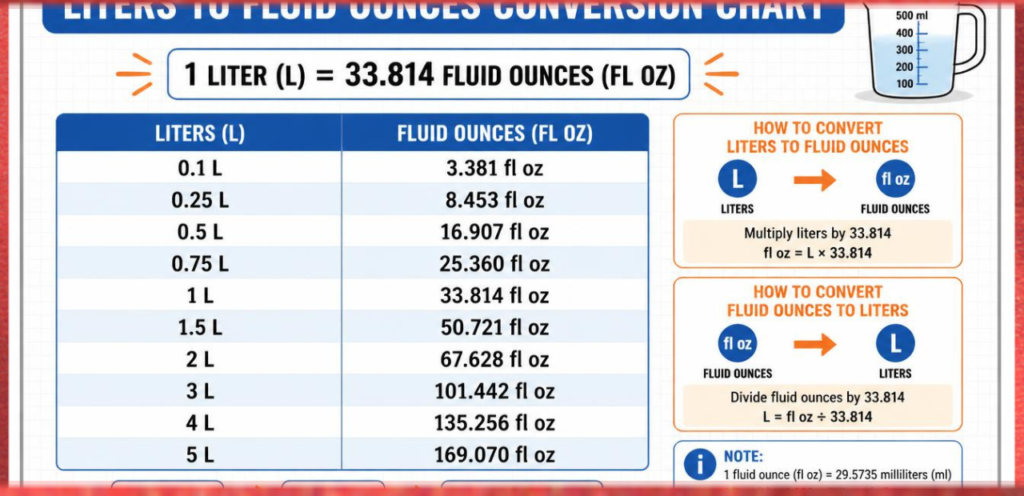
To convert liters to fluid ounces, multiply the number of liters by 33.814023 fluid ounces per liter. This is the standard relationship between a liter and a US fluid ounce, and it gives you a precise result before rounding.
The conversion formula is:
fluid ounces = liters × 33.814023
So, if you have 1 liter:
1 liter = 33.814023 fluid ounces
For everyday use, people commonly round that to 1 L = 33.814 fl oz, or even about 33.8 fluid ounces when extreme precision is not needed. A kitchen rarely needs six decimal places, thankfully.
The important little detail here is the word “fluid.” A fluid ounce (fl oz) measures volume, while an ounce used for weight measures mass. They are not interchangeable, and mixing them up can make a perfectly good recipe wander off into the weeds.
How to Convert Liters to Fluid Ounces
Learning how to convert liters to fluid ounces takes only one multiplication. Start with the amount expressed in liter (L), then multiply it by the conversion factor of 33.814023.
For example, suppose a container holds 2 liters. The calculation looks like this:
2 × 33.814023 = 67.628046 fluid ounces
Rounded to three decimal places, that becomes 2 L = 67.628 fl oz.
This simple unit conversion formula works for large or small amounts. Whether you are converting a water bottle, a cooking ingredient, or a large container, the same conversion scale keeps marching along without drama.
A quick mental estimate is also possible. You can think of one liter as roughly 33.8 US fluid ounces. It wont be exact to every decimal place, but for casual measurement conversion, it is usually more than enough.
Liters to Fluid Ounces Conversion Formula
The liters to fluid ounces formula is useful because it removes the need to memorize a whole collection of numbers. You only need the conversion factor.
Liters × 33.814023 = US fluid ounces
For instance, to convert 5 L to fluid ounces:
5 × 33.814023 = 169.070115 fl oz
That means 5 liters = 169.070114 fluid ounces when rounded according to the commonly displayed value in conversion references. Tiny differences in the final decimal can occur depending on how a calculator rounds intermediate values, which is nothing to lose sleep over.
If you are working with a recipe, nutrition label, beverage container, or household measurement, rounding to two or three decimal places is often easier to read. Precision is useful, but readability has its own quiet little value.
Liters to Fluid Ounces Conversion Table
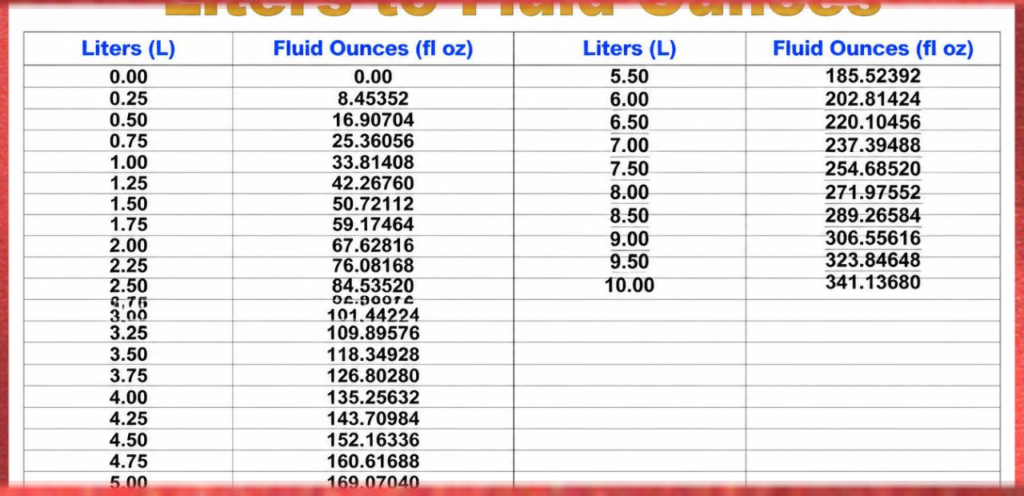
A conversion table is handy when you need an answer immediately and do not want to multiply every time. Here are several common values for quick reference.
| Liters | US Fluid Ounces |
|---|---|
| 1 L | 33.814 fl oz |
| 1.25 L | 42.267 fl oz |
| 1.5 L | 50.721 fl oz |
| 1.75 L | 59.175 fl oz |
| 2 L | 67.628 fl oz |
| 2.5 L | 84.535 fl oz |
| 3 L | 101.442 fl oz |
| 5 L | 169.070 fl oz |
| 10 L | 338.140 fl oz |
| 20 L | 676.280 fl oz |
| 30 L | 1,014.421 fl oz |
| 40 L | 1,352.561 fl oz |
This liters conversion chart is particularly useful for quick comparisons. You might glance at it while shopping, cooking, planning an event, or checking how much liquid a storage container can actually hold. Numbers become much friendlier when they sit beside their equivalents, somehow.
Common Liters to Fluid Ounces Examples
People often search for individual conversions rather than the whole mathematical explanation. So here are some of the most useful everyday values, with the calculation included where it helps.
1 Liter to Fluid Ounces
1 liter = 33.814023 US fluid ounces, commonly written as 33.814 fl oz. So if someone asks, “how many fluid ounces are in a liter?” that is the number you want.
1.25 Liters to Fluid Ounces
1.25 liters = 42.267529 fluid ounces, which is approximately 42.267 fl oz. That is a useful amount for larger beverage containers, although packaging may use a rounded commercial measurement.
1.5 Liters to Fluid Ounces
1.5 liters = 50.721035 fluid ounces, or approximately 50.721 fl oz. If you have ever looked at a 1.5-liter bottle and wondered about its US measurement, now you dont have to wonder.
1.75 Liters to Fluid Ounces
1.75 liters = 59.174540 fluid ounces, approximately 59.175 fl oz. It sits just below 60 fluid ounces, which makes the mental comparison pretty easy.
2 Liters to Fluid Ounces
2 liters = 67.628046 fluid ounces, or approximately 67.628 fl oz. This is one of the most searched conversions because 2-liter bottles are common in many places.
2.5 Liters to Fluid Ounces
2.5 liters = 84.535058 fluid ounces, which rounds to 84.535 fl oz. If your container says 2.5 L and your recipe speaks in ounces, this conversion saves a bit of head scratching.
3 Liters to Fluid Ounces
3 liters = 101.442069 fluid ounces, approximately 101.442 fl oz. Once you get above 100 fluid ounces, the conversion starts looking much bigger than the original metric number.
What Is a Liter?
A liter is a metric unit used to measure volume. The spelling litre is common in British and many other varieties of English, while “liter” is standard American spelling.
You may also see L, l, or occasionally ℓ in different contexts, although uppercase L is generally clearer because lowercase l can resemble the number 1.
One liter is equal to one cubic decimeter, meaning a cube measuring 10 centimeters on each side contains exactly one liter. That also connects the liter to smaller metric units: one liter contains 1,000 milliliters (mL).
There is another lovely connection hiding underneath the measurement. One milliliter is equal in volume to one cubic centimeter (cm³). So 1 liter equals 1,000 cubic centimeters.
Metric measurements tend to fit together like little nesting boxes, which is one reason the metric system is so convenient.
What Is a Fluid Ounce?
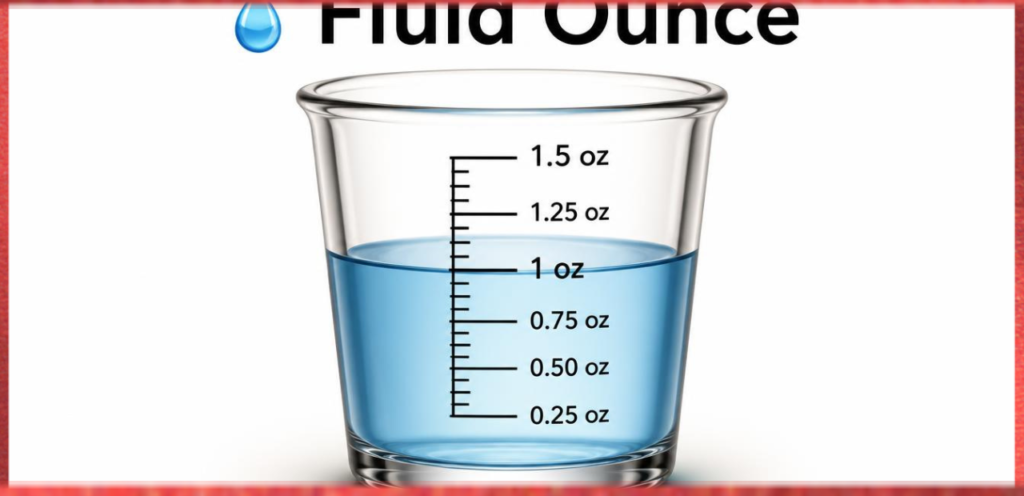
A fluid ounce is a unit of volume used in the US customary system and also, with a different exact size, in the British imperial system. This distinction matters more than people often expect.
The US fluid ounce is approximately 29.5735 milliliters. Therefore, one liter divided by approximately 29.5735 mL gives about 33.814 US fluid ounces.
The phrase US fluid ounces is important when using the conversion in this article. A UK imperial fluid ounce is smaller, so a liter does not equal exactly the same number of imperial fluid ounces.
If a recipe, website, or label does not specify which system it uses, pause for a second and check the context.
Metric System vs. US Customary Units
The metric system and US customary units approach measurement differently. Liters belong to the metric family, while US fluid ounces belong to the customary measurement system used in the United States.
The liter is recognized as an SI accepted unit, even though the SI base unit for volume is technically the cubic meter. This is one reason liters appear so comfortably beside official metric measurements.
In the United States, people commonly encounter fluid ounces, cups, pints, quarts, and gallons. A liter therefore becomes useful as a bridge between two measurement worlds.
It is metric on one side and household-friendly on the other, a slightly nerdy little diplomatic ambassador.
Liters, Milliliters, Cups, Pints, and Gallons
Once you understand liters, you can connect them to many other volume measurement units.
One liter equals 1,000 milliliters. Since a US fluid ounce is approximately 29.5735 mL, the liter-to-fluid-ounce relationship follows naturally.
You may also encounter:
- Cup a common household cooking measurement.
- Pint larger than a cup and smaller than a quart in US customary measurements.
- Quart four US cups.
- Gallon four US quarts.
- Milliliter one-thousandth of a liter.
- Cubic centimeter equal in volume to one milliliter.
- Cubic meter a much larger metric volume unit.
- Cubic inch and cubic foot common US customary volume measurements.
- Cubic yard used for still larger quantities, particularly materials and spaces.
These relationships make a volume converter more useful than a single-purpose calculation. Once you have the metric quantity, you can move between several equivalent measurements depending on what the situation calls for.
Why the Liter-to-Ounce Difference Matters in Recipes
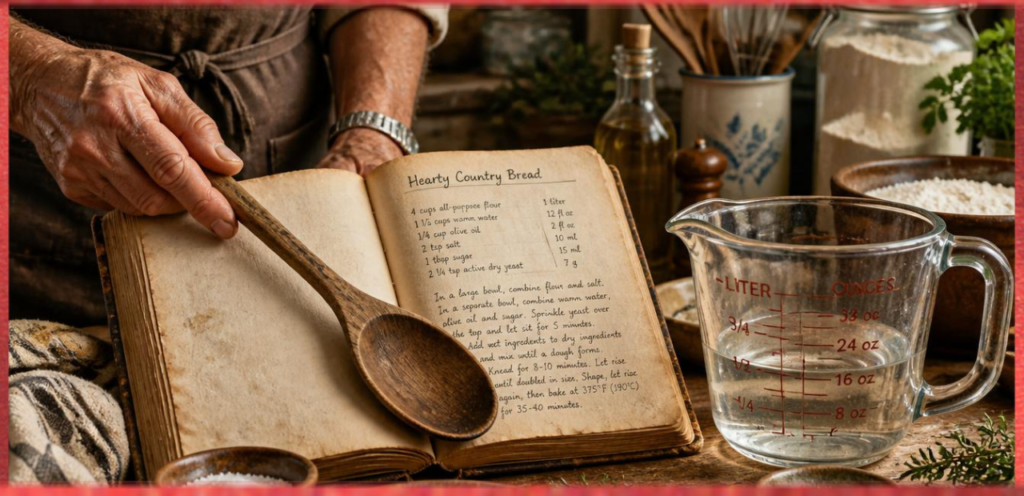
Cooking is one of those places where measurement errors can quietly become dinner errors. A recipe might call for 32 fluid ounces while your measuring jug is marked in liters.
Knowing that one liter is about 33.8 US fluid ounces immediately tells you that the amounts are very close, but not identical.
This matters particularly for baking, sauces, drinks, and recipes where liquid ratios affect the final texture.
A small difference might be harmless in a soup but noticeable in a carefully balanced dessert. And yes, nobody wants a birthday cake that behaves like a science experiment gone rogue.
For household cooking, it is usually sensible to use a rounded conversion when the recipe itself is not highly precise.
For laboratory work, industrial applications, or regulated measurements, use the appropriate exact values and specifications instead.
Nutrition Labels and Beverage Packaging
You will often see liters and milliliters on beverage containers while nutritional information may describe a serving in fluid ounces. This is where nutrition labeling creates a practical reason to understand both systems.
The U.S. Food and Drug Administration (FDA) regulates many aspects of food labeling in the United States, including requirements involving serving information and metric equivalents. Consumers may therefore encounter metric and US customary measurements together on the same package.
Imagine holding a bottle labeled 1.5 L and reading a serving size listed in fluid ounces. You dont need to mentally panic at the sudden appearance of two measurement systems. The conversion simply gives you the bridge between them.
For exact regulatory questions, however, rely on current official labeling guidance rather than a general conversion article. Rules and labeling details can change, and packaging has a surprisingly serious side to it.
How Accurate Is 33.814023?
The number 33.814023 fluid ounces per liter comes from the exact relationship between the liter and the US fluid ounce.
More specifically, one US fluid ounce is defined as approximately 29.5735295625 milliliters, while one liter equals 1,000 milliliters.
Dividing those values produces approximately 33.8140227 fluid ounces per liter, which is commonly represented as 33.814023.
So when you see 1 liter = 33.814023 fluid ounces, you are looking at a precise conversion value rather than a random rounded guess.
Standards organizations such as the National Institute of Standards and Technology (NIST) provide authoritative information about measurement units, conversions, and relationships between US customary and metric units. For highly technical work, those references are preferable to casual online charts.
Why Some Conversion Results Look Slightly Different

You might type 5 liters into one calculator and get 169.070115 fluid ounces, while another displays 169.07 fl oz. Both can represent the same conversion at different levels of rounding.
This is called decimal conversion, and it is completely normal. A calculator may keep many digits internally and display only two, three, or six decimal places. The underlying equivalent volume has not mysteriously changed.
For everyday measurement, rounded conversion is generally easier to use. For scientific or engineering calculations, preserve additional digits until the final stage, then round according to the required precision. It is a small habit that prevents larger mistakes later.
A Quick Liters to Fluid Ounces Calculator Method
If you don’t have a calculator tool in front of you, the process is still pleasantly simple.
Take your number of liters.
Multiply it by 33.814023.
Then round the result to the number of decimal places you actually need.
For example:
3.5 liters × 33.814023 = 118.3490805 fluid ounces
So 3.5 liters is approximately 118.349 fl oz.
That is the whole volume calculation. No mysterious conversion ritual, no complicated chart required.
Large-Volume Conversions
Large containers can make the numbers look dramatic, but the formula never changes.
10 liters = 338.14023 fluid ounces, or about 338.14 fl oz.
20 liters = 676.28046 fluid ounces, or about 676.28 fl oz.
30 liters = 1,014.42069 fluid ounces, or about 1,014.42 fl oz.
40 liters = 1,352.56092 fluid ounces, or about 1,352.56 fl oz.
At this scale, you may find gallons more convenient than fluid ounces. For example, converting liters to gallons can make large quantities easier to picture.
A US gallon contains 128 US fluid ounces, so once the volume becomes substantial, choosing the most sensible unit is often better than insisting on ounces.
Related Volume Conversions You May Need
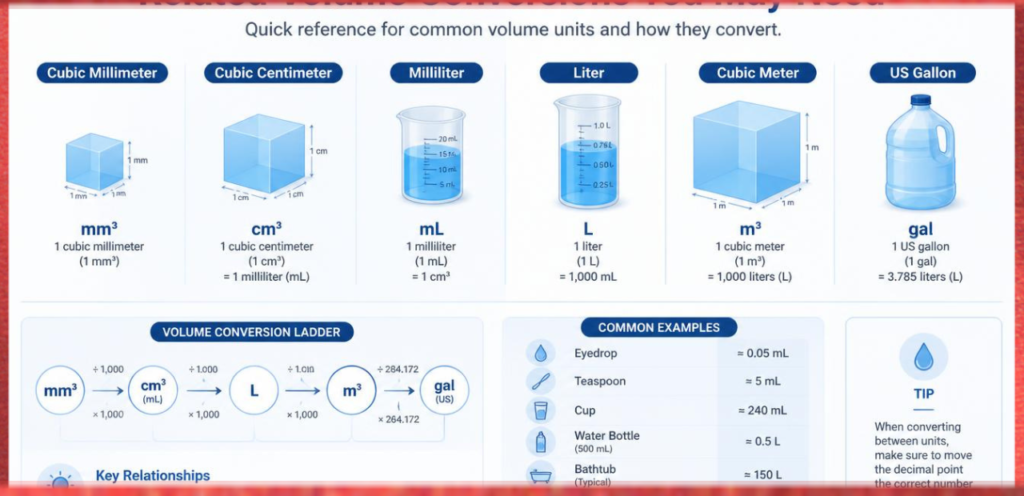
The same measurement idea can lead into many useful conversions. If you are already working with liters, you may also need liters to gallons, liters to quarts, liters to pints, or liters to cups.
For smaller quantities, liters to milliliters, liters to cubic centimeters, and milliliters to fluid ounces can be especially useful. For construction or spatial measurements, you might instead need liters to cubic inches, cubic feet, or cubic yards.
One caution is worth keeping in your pocket: converting volume to mass is different. You cannot directly convert liters to grams, kilograms, or pounds without knowing the density of the substance.
A liter of water and a liter of cooking oil occupy the same volume, but they do not weigh the same. Physics likes keeping these little surprises around.
Understanding Measurement Standards
Measurement systems may feel ordinary because we use them every day, but the standards behind them are carefully maintained. The National Institute of Standards and Technology (NIST) is an important US reference for measurement standards and unit information.
Likewise, government guidance concerning household measures can help explain how metric equivalents are presented.
References such as the Guidelines for Determining Metric Equivalents of Household Measures are useful when accurate household measurement equivalencies matter.
There are also Units outside the SI that are widely used in daily life. The liter itself is a good example: it is not an SI base unit, but it is accepted for use with SI.
This is a useful reminder that practical measurement systems are sometimes less tidy than a school textbook makes them look.
Common Mistakes When Converting Liters to Ounces
One of the most common mistakes is confusing a fluid ounce with a weight ounce. Remember: a fluid ounce measures volume, while a weight ounce measures mass. Same word, different job.
Another mistake is forgetting whether the conversion uses US or imperial fluid ounces. The phrase “ounce” by itself can be frustratingly vague, so always check the measurement system when accuracy matters.
A third mistake is rounding too early. If you are performing several calculations, keep the more precise value until the final result. Otherwise, tiny rounding differences can pile up like socks in a laundry basket.
Finally, dont assume every online “ounce” conversion means the same thing. Liters to US fluid ounces is the specific conversion used by the formula in this article.
A Simple Way to Remember the Conversion
If you only need a rough everyday estimate, remember this:
1 liter ≈ 33.8 US fluid ounces
Then scale it up or down.
Two liters? About 67.6 ounces.
Three liters? About 101.4 ounces.
Five liters? About 169.1 ounces.
Ten liters? About 338.1 ounces.
It isn’t glamorous mathematics, but it works. And sometimes the best tool is the one you can remember while standing in a grocery aisle with one hand holding a bottle and the other holding your phone.
When a Converter Is Better Than Mental Math
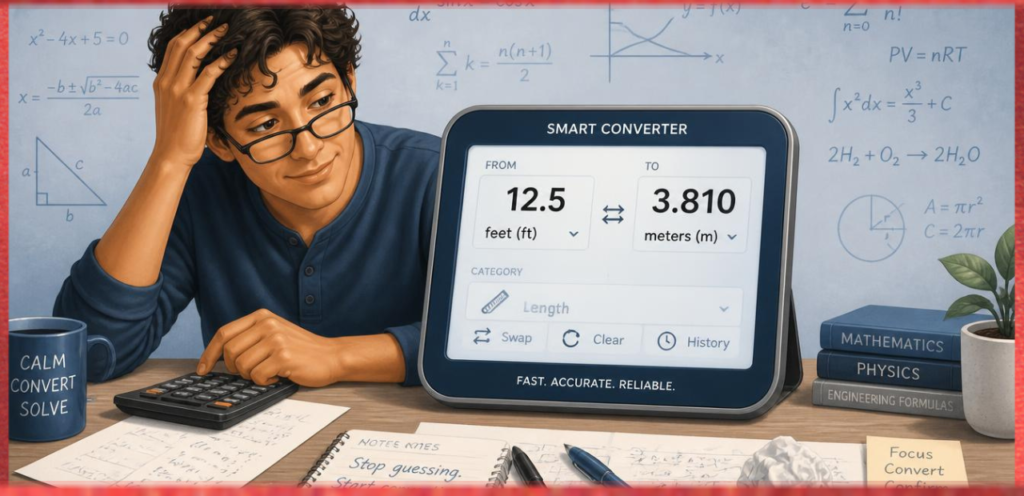
A liters to fluid ounces calculator is useful when the number contains several decimal places, when you need a precise answer, or when you are converting many values.
There is no prize for doing arithmetic manually when a reliable calculator can do it in a heartbeat.
A unit conversion calculator can also reduce mistakes when switching among liters, gallons, quarts, pints, cups, and fluid ounces. For professional applications, always make sure the calculator identifies the correct unit system.
In everyday situations, though, the underlying formula remains valuable because it lets you understand the result rather than blindly trusting a number.
That little bit of understanding is often what saves you when the internet connection decides to disappear at exactly the wrong moment.
Frequently Asked Question
.5 liter to oz
0.5 liter = 16.907 fluid ounces (fl oz). This is based on the US fluid ounce conversion.
.5l to oz
0.5 L = 16.907 fl oz. So, half a liter is approximately 16.91 US fluid ounces.
3l to oz
3 L = 101.442 fluid ounces. In rounded form, that is about 101.44 US fluid ounces.
3l to fl oz
3 liters = 101.442 fl oz using the standard US fluid ounce conversion factor of 33.814023 fl oz per liter.
3.5 liters to o
3.5 liters = 118.349 fluid ounces, or approximately 118.35 US fluid ounces.
Read this blog https://naxovater.com/what-is-10-weeks-from-today/
Final Thoughts on Liters to Fluid Ounces
Converting liters to fluid ounces is a small mathematical task, but it connects two measurement systems that appear constantly in kitchens, supermarkets, laboratories, travel, nutrition information, and ordinary household life. Once you know that 1 liter = 33.814023 fluid ounces, the rest is simply multiplication.
The most useful formula to remember is:
fluid ounces = liters × 33.814023
From there, you can calculate 1 liter to fluid ounces, 2 liters to fluid ounces, 5 liters to fluid ounces, 10 liters to fluid ounces, or virtually any other amount you need.
You can also use a liters conversion chart, a volume conversion calculator, or a dedicated liter to fluid ounce converter whenever speed matters more than doing the arithmetic yourself.
And perhaps there is a tiny lesson hiding underneath all these numbers. Measurements are really about making things understandable.
A parent measuring a bottle, a cook following a treasured family recipe, a traveler checking a drink container, or someone preparing a celebration for a newborn daughter is doing the same basic thing: turning an unfamiliar quantity into something they can work with.
Welcoming a baby girl brings enough beautiful uncertainty already; your measuring cup doesn’t need to add to it.
Whether you’re preparing a bottle, mixing a recipe for a family gathering, or simply trying to understand what that “1.5 L” printed on a container actually means, the conversion is now pleasantly straightforward.
So keep the simple relationship nearby: one liter is about 33.8 US fluid ounces. A little number, a useful bridge, and one less thing to puzzle over while life is busy doing its wonderfully messy thing.
If you have a favorite conversion trick, an unusual measurement question, or a memorable family moment involving a kitchen measuring cup, sharing it with others can make these practical little topics surprisingly human.